


















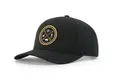
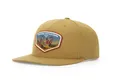
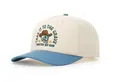
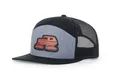
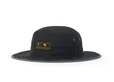
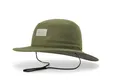
















Dad Hat vs Trucker Hat: The Differences

Key Takeaways
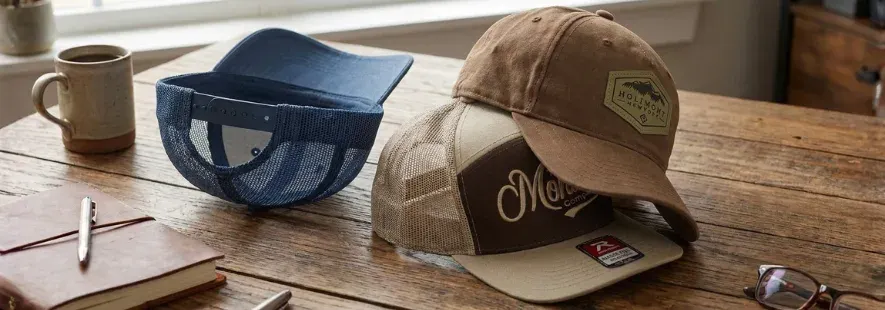
- ‣ A dad hat has an unstructured, low-profile crown. A trucker hat has a structured crown with a foam front panel and a mesh back.
- ‣ Trucker hats breathe better because of the mesh back, so they’re the pick for hot weather and outdoor work.
- ‣ Dad hats are usually cotton twill with a strapback closure. Trucker hats pair a cotton or polyester front with plastic mesh and a snapback.
- ‣ Both styles take embroidery and patches well. The foam front on a trucker hat gives a bigger, flatter surface for bold logos.
Need custom hats for your whole team or next event? Get a free quote from The Monterey Company and skip the guesswork on crown style and closures.
What Is the Difference Between a Dad Hat and a Trucker Hat?
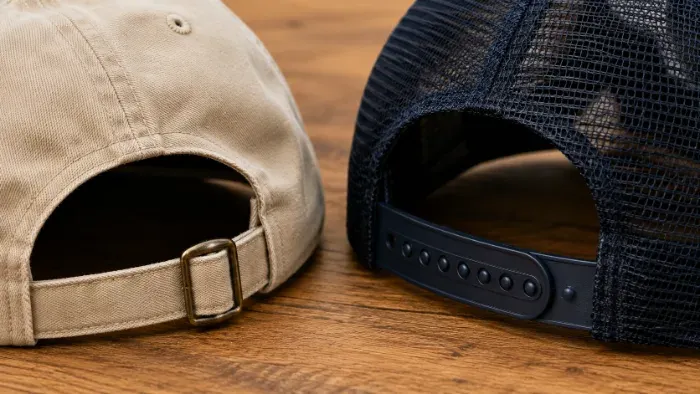
A dad hat is an unstructured, low-profile baseball cap, usually cotton twill, with a curved brim and a strapback closure. A trucker hat is a structured cap with a foam front panel, a breathable mesh back, and usually a snapback closure. The crown is the biggest difference: a dad hat’s front panel folds and moves, while a trucker hat’s front stands up on its own.
| Feature | Dad Hat | Trucker Hat |
|---|---|---|
| Crown | Unstructured, soft | Structured, stands up on its own |
| Profile | Low | Mid to high |
| Front panel | Cotton twill, no backing | Foam or buckram-backed fabric |
| Back | Solid fabric | Plastic mesh |
| Brim | Curved | Curved or flat |
| Closure | Strapback with metal buckle | Plastic snapback |
| Breathability | Moderate | High |
| Best for | Everyday wear, low-key branding | Outdoor work, hot weather, bold logos |
What Is a Dad Hat?
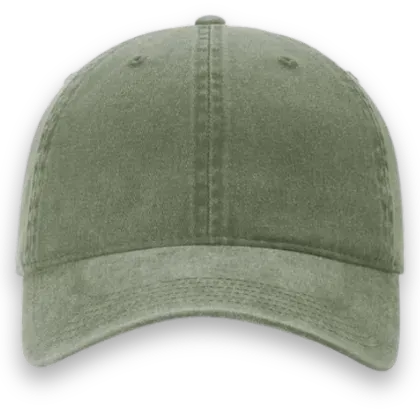
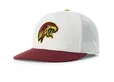
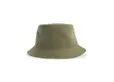
A dad hat is a baseball cap with an unstructured crown, so the front panel folds and moves instead of standing stiff. That low profile gives dad hats their relaxed fit and broken-in, vintage look. Most dad hats are cotton or cotton twill, and the curved brim is soft right out of the box.
Dad hats almost always use a strapback: a fabric strap with a metal buckle in the back. One size adjusts to fit most of a team without anyone fussing over sizing. Wool blends show up in cooler months, but cotton twill is the everyday default for custom dad hats.
What Is a Trucker Hat?
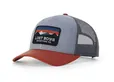
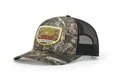
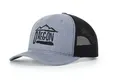
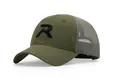
A trucker hat is a structured baseball cap with a foam or stiffened front panel and a mesh back. Some trucker hats run a high crown for extra front space. That tall, flat front panel is a wide surface for embroidery and bold branding.
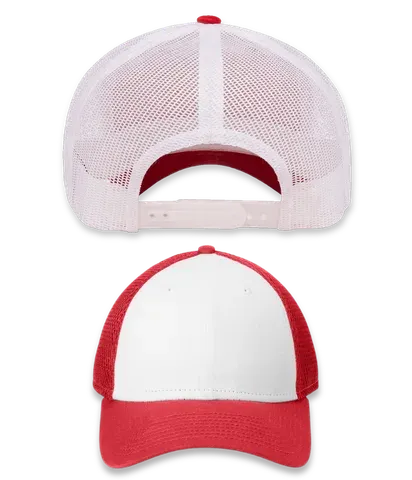
The mesh back is where trucker hats earn their reputation. Plastic mesh lets air move through, so your head stays cooler outdoors in hot weather. Most trucker hats close with a plastic snapback, though some use a strap with a metal buckle. You’ll find five-panel and six-panel construction, depending on the brand. The classic custom trucker hat uses a five-panel build with one seamless front panel.
Where Did Dad Hats and Trucker Hats Come From?

Dad hats and trucker hats are both baseball cap styles. Each one took the ball cap shape and changed one part of it: the dad hat softened the crown, and the trucker hat swapped the back for mesh.
Trucker hats started as promotional giveaways. In the 1960s and ’70s, feed and farm supply companies handed out mesh-back logo hats, which is why they’re also called “gimme caps.” They became a fashion trend in the early 2000s and never fully left. The dad hat name caught on in the mid-2010s for the plain, unstructured cotton caps that had been around for decades. Today both styles show up at concerts, gyms, job sites, and company events.
How Do Fit and Materials Compare?
Comfort and Fit
Dad hats sit low, with the crown hugging the head. Trucker hats feel roomier up front because of the taller crown, so the two fit differently even at the same size. (Our guide to hat profiles covers low, mid, and high crowns in more detail.) Dad hats almost always have a curved brim. Trucker hats come with either a flat or curved brim, depending on the model. Both are comfortable for all-day wear, so the closure is usually what decides it.

Materials That Matter
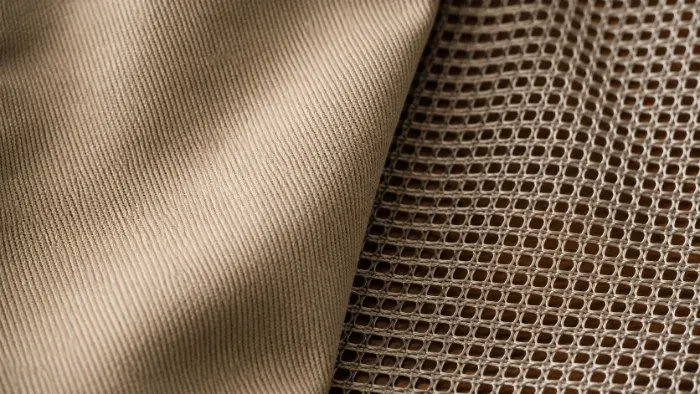
Dad hats are mostly cotton or cotton twill, with canvas in heavier builds. Trucker hats pair a cotton, canvas, or polyester front with a plastic mesh back. Some trucker hats come in wool blends for colder weather, but polyester and mesh are the classic combination.
Strapback vs. Snapback
A strapback uses a fabric strap and metal buckle, and it’s the standard closure on a dad hat. It adjusts in small increments and holds up for years. A snapback uses a plastic strip with snaps, the usual closure on a trucker hat. Custom snapback baseball hats are faster to size, but they adjust in fixed steps.
When Should You Wear a Dad Hat vs. a Trucker Hat?
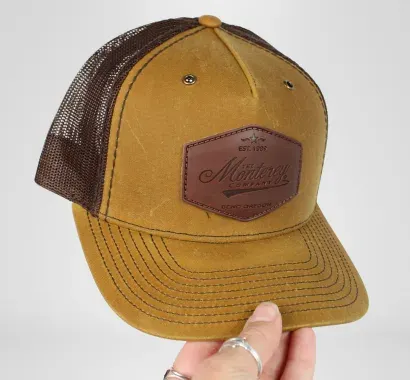
Wear a trucker hat when airflow matters: a golf course, a hiking trail, a job site, or a trade show booth in the sun. Breweries and outdoor brands order a lot of trucker hats too, since the look fits that crowd.
Wear a dad hat for everyday wear and a more casual style. The curved brim still gives you sun protection, without the focus on airflow. Workwear crews and sports teams order both styles for team uniforms, and either one works as a promotional giveaway at events.
Which Hat Is Better for Logos and Bulk Orders?

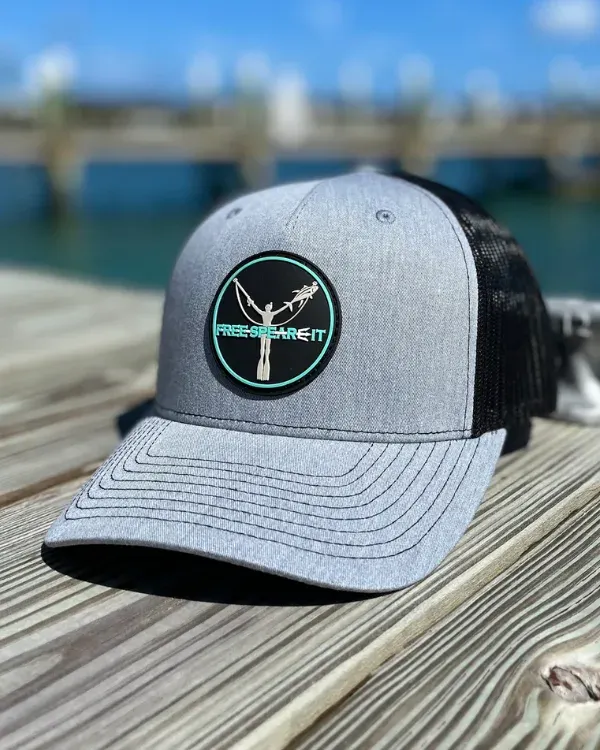
Trucker hats are the better canvas for big, bold logos, because the foam front panel is close to a blank billboard. Dad hats suit smaller, low-key branding that looks good on everyday wear. Both styles take embroidery well, and both can carry custom hat patches, including leather patches, if you want texture and dimension. Screen printing works on both.
For bulk orders, you’re not stuck picking from three plain colors. Our team proofs every design and gives guidance on logo size and placement before anything goes to production.
Logo Placement Tips
Plan logo placement before you order. A logo front and center reads best from a distance, which matters for team uniforms and trade shows. For a quieter look, a small logo on the side panel still gets your brand seen without shouting.

Skip the sizing headaches and let The Monterey Company handle your bulk dad hat or trucker hat order, with a free digital proof and reorder support built in.
Which Cap Should You Choose?
Choose a dad hat if you want a relaxed fit and a broken-in, vintage look. Choose a trucker hat if you need breathability and a bold front for your logo. A lot of teams order both and let people pick.

The Monterey Company has made custom products in Bend, Oregon since 1989, including custom caps in cotton, canvas, and polyester for teams, breweries, and events. We’ve heard the strapback vs. snapback debate more times than we can count.

Eric Turney
Eric Turney A devoted father, football fanatic, and stand-up comedy enthusiast who loves nothing more than bringing people together over great food and a good time. When he’s not cheering on his favorite team or experimenting in the kitchen, you can find him connecting with others on LinkedIn

 Coins & Medals
 Corporate Gifting & Events
 Custom Labels & Accessories
 Everything Keychains
 Headwear
 Holidays